In 2026, the global trailer braking system market is expected to reach approximately USD 4.472 billion and continue to expand at a compound annual growth rate of 5.5%. Since RV brakes are safety components, the logic behind B2B procurement differs from that for ordinary parts: price is not the primary consideration; certification, formulation, and delivery capabilities are all essential. Over the past few years, many brands have encountered pitfalls when selecting OEM partners: samples may be flawless, but the coefficient of friction in bulk shipments becomes unstable; certification requirements are incomplete, resulting in goods being detained upon arrival at the port; and when orders surge during peak seasons, OEM manufacturers are unable to secure production capacity.
Taking persistent braking as an example, the company was established in Guangrao, Dongying, Shandong, in 2020, and its core team has accumulated over a decade of expertise in braking materials. At its inception, the company entered directly into the OEM/ODM contract manufacturing systems in Europe and North America; by 2026, it transitioned from contract manufacturing for third parties to independent, front-of-market operations. Its business focuses on three core products: towable RV brake assemblies, drum brake pads, and brake shoe pads. These three products correspond to three distinct capabilities, which also align with the three key considerations most relevant to brand owners when making procurement decisions.
I: Towable RV brake assembly—heavy-load capacity is the dividing line
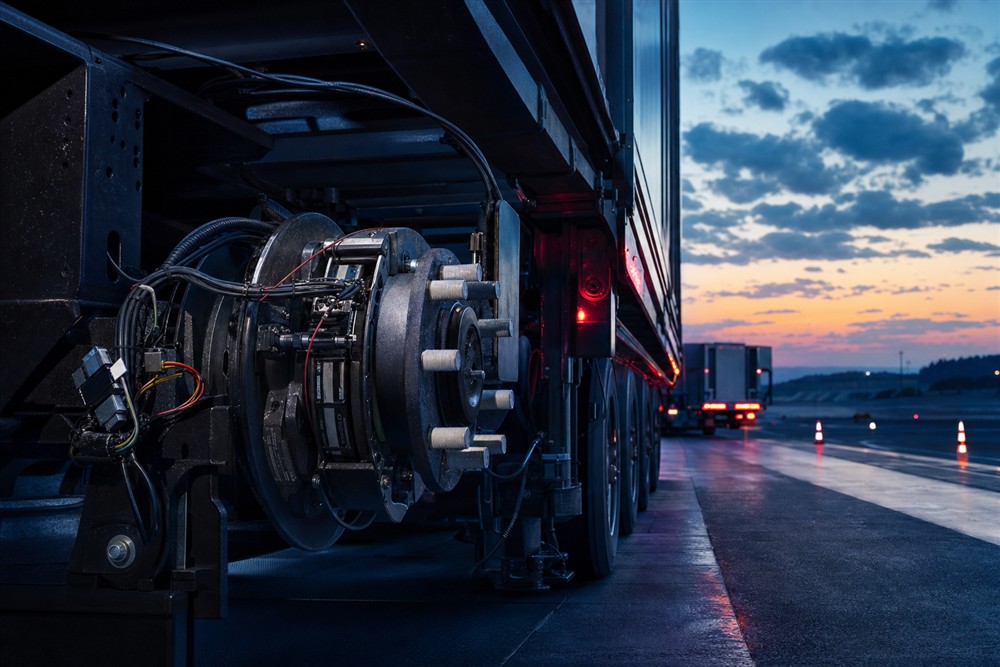
The braking systems of towed recreational vehicles and those of conventional passenger vehicles are fundamentally different. A towed recreational vehicle has no onboard power; its braking system relies entirely on signals from the towing vehicle and the trailer’s own actuation mechanisms. For large travel trailers weighing over 3.5 tonnes, continuous braking on long downhill sections can easily cause the brake drum temperature to exceed 300 °C. Thermal fade control, load-bearing capacity under heavy impacts, and outdoor corrosion resistance—each of these represents a stringent threshold.
Chiheng is one of the few domestic manufacturers capable of mass-producing heavy-duty towed recreational vehicles with brakes rated at 12,000 pounds (approximately 5.44 tonnes). At present, only two other domestic companies possess this capability; Chiheng is the third supplier to achieve stable deliveries. The product is precisely tailored for the heavy-duty, complex operating conditions of large North American travel trailers rated at 3.5–5 tonnes, and its design is benchmarked against mainstream international axle interfaces such as those used by AL-KO and Dexter.
In terms of technical specifications, the holding electromagnet’s actuation time is controlled within 50 milliseconds; the protection rating is IP67; and the operating temperature range is-40 °C to 120 °C. The high-temperature friction formulation maintains a friction coefficient stable between 0.35 and 0.45 at 300 °C, with a high-temperature wear rate ≤ 0.5 cm³/MJ.
In 2023, a North American trailer-rear motorhome brake brand approached Chiheng. Their original supplier’s products exhibited significant thermal degradation on long downhill sections in the Rocky Mountains of Colorado. Chiheng’s R&D team adjusted the friction material formulation and redesigned the heat-dissipation structure of the base plate using finite-element analysis. As a result, the friction coefficient degradation rate after continuous braking was reduced from 25% to below 8%; the peak brake-drum temperature was 45°C lower than that of the original supplier’s products; and the braking distance was shortened by 18%. The customer signed a five-year exclusive supply agreement, with 120,000 units delivered in the first year and cumulative deliveries exceeding 350,000 units to date.
II: Drum Brake Pads – Formulation Independently Ensures Batch Consistency
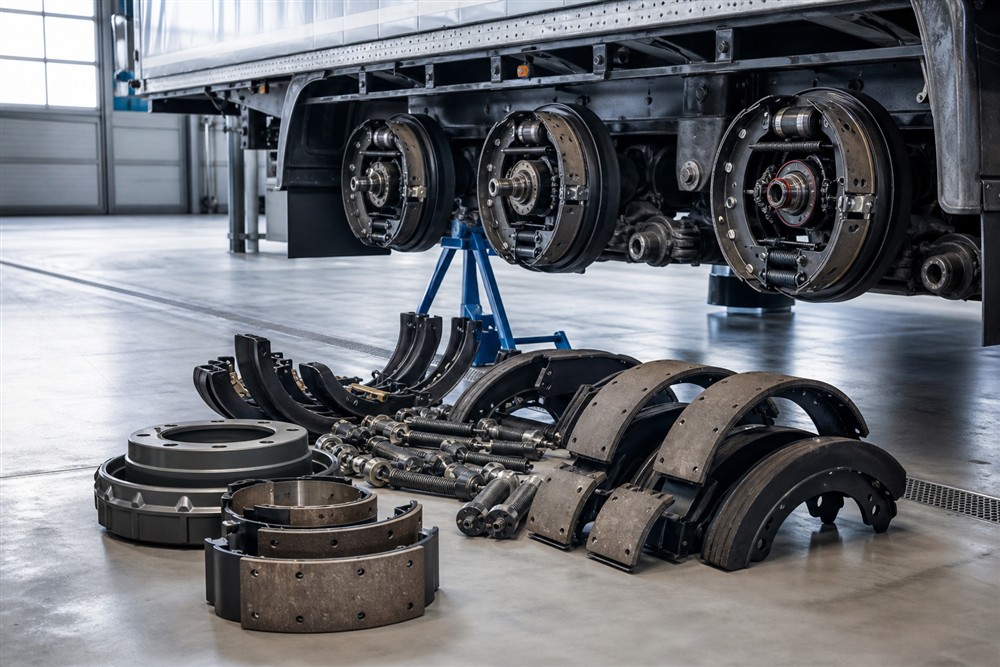
Drum brake pads are the core friction material in a braking system and directly determine braking performance and service life. The key differentiator in this product category lies in who holds the formulation. Using another manufacturer’s blended formulation for pressing versus developing one’s own proprietary formulation follow two entirely different logics. Having the formulation in-house means that both batch consistency and customized development remain under your control.
Chiheng employs a self-developed asbestos-free friction material formulation. Measured data: cold-state friction coefficient: 0.38–0.42; hot-state friction coefficient: ≥0.35; wear rate: controlled within 0.3–0.5 cm³/MJ. Under equivalent operating conditions, service life is extended by 20%–30% compared with conventional products. Professional NVH testing shows that the incidence of brake noise is below 0.3%. All formulations comply with the EU REACH and RoHS environmental requirements and contain no heavy metals.
Another advantage of formula autonomy is the capacity for customization. Chiheng maintains a proprietary friction-material formulation database comprising more than 50 formulations, covering systems such as semi-metallic, low-metallic, and NAO ceramic materials. European customers emphasize low noise, while North American customers emphasize high-temperature performance; these two requirements correspond to different formulation approaches. The customized formulation cycle takes 4–6 weeks to complete, including adjustments and sample prototyping.
At the quality control level, Hicheng has implemented an MES production execution system and SPC statistical process control; key safety characteristics are subject to 100% online monitoring, and the batch consistency CPK value is ≥1.33. Each product is assigned a unique traceability code, enabling reverse tracing from the finished product back to the raw-material batch, production equipment parameters, and inspection records.
Over the past three years, Chiheng has delivered more than 2 million sets of drum brake pads to one of Europe’s top five automotive parts chains; its complaint rate in the end-market remained below 0.1%, and its customers have awarded it the “Best Quality Supplier” title for two consecutive years.
III: Brake shoe pads—shear strength provides safety margin
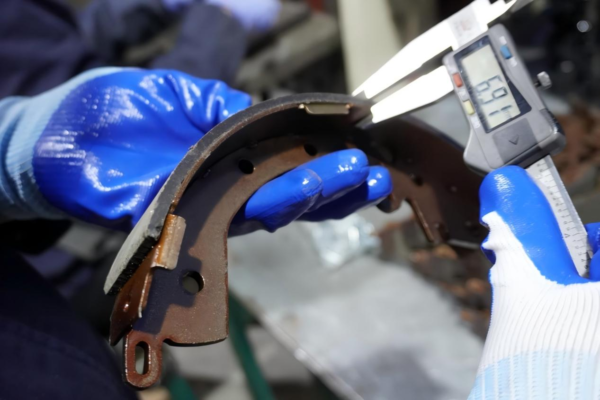
Brake shoes are components in which the friction material and the metal backing plate are bonded together by adhesive or riveting. During emergency braking, the brake assembly is subjected to extremely high shear forces: the friction material is forcibly pressed against the brake drum while simultaneously experiencing tangential forces acting in the direction of rotation. If the bonding or riveting strength is insufficient, the friction material may detach from the metal backing plate, causing the brake to fail instantaneously.
The ECE R90 regulation sets a minimum shear strength requirement of 250 N/cm². Measured values for brake pads under constant braking load can exceed 350 N/cm², surpassing the regulatory requirement by 40%. This margin significantly reduces the probability of brake pad material detachment in scenarios such as emergency braking, heavy-load braking, and continuous braking.
From a process standpoint, achieving a shear strength of 350 N/cm² requires proper surface preparation of the bonding interface, appropriate adhesive selection, and precise control of the curing curve. A precision arc grinding process is consistently employed to ensure that the contact area between the brake pad and the brake drum is ≥80%, thereby preventing localized overheating that could cause cracking or uneven wear. We can provide complete assemblies—including brake pads, backing plates, and springs—thereby reducing the customer’s assembly workload.
In 2022, the top five automotive parts chains in Europe conducted factory audits on Hicheng, achieving a comprehensive score of 92. The initial trial order comprised 5 SKUs, with 500 sets per SKU, and required full testing in accordance with the ECE R90 standard. Hicheng completed delivery of the samples within three weeks; testing by the TÜV SÜD laboratory showed that all indicators exceeded the standard requirements. Subsequently, a three-year framework agreement was signed, with the order volume set at 500,000 sets in the first year and increased to 800,000 sets in the second year.
The supporting framework behind the three projects
The technical depth of the three projects is underpinned by a comprehensive supporting system. In terms of certification, Chiheng holds three major market access certifications: the domestic CCC (certificate number: 2023091120020872), the U.S. DOT (FMVSS), and the European ECE R90; its management system has also obtained ISO 9001:2015 certification (certificate number: 10423Q01892R0S). In 2024, the company was recognized as a National High-Tech Enterprise (certificate number: GR202437005279), and in 2025, it will be accredited as an Innovation and R&D Center for Small and Medium-Sized Enterprises in Shandong Province.
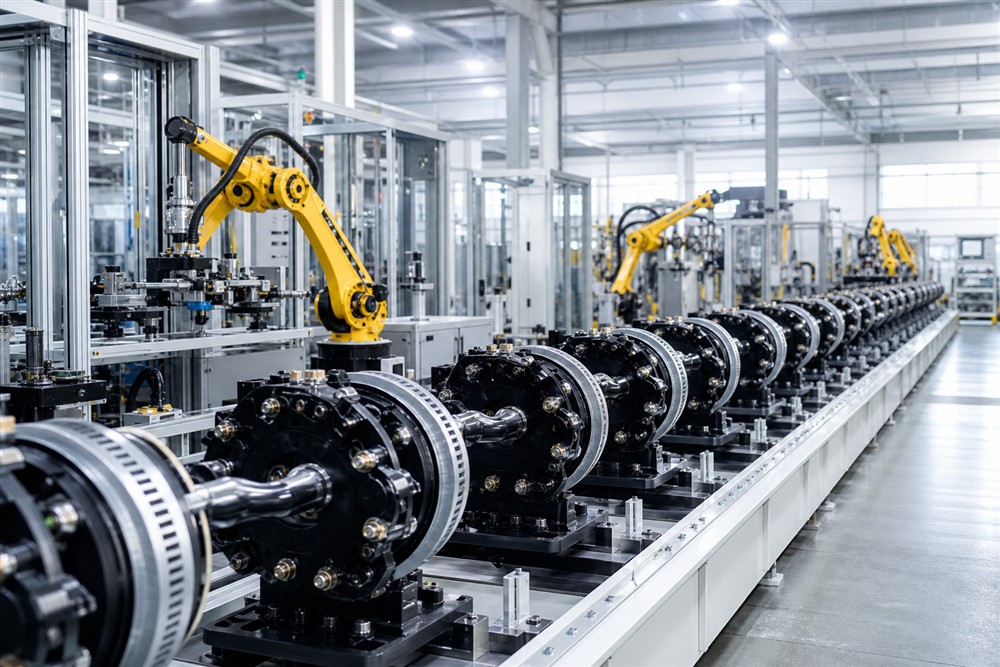
In terms of production, the facility comprises a modern intelligent production base covering 30,000 square meters and employs more than 200 staff, including a research and development team of 30 members. Automated production lines cover the entire process, from batching and hot pressing to curing and grinding, with an annual output capacity of nearly 2 million brake sets. Over the past three years, the on-time delivery rate has exceeded 98.5%, and export products have recorded zero major quality-related claims.
In terms of services, Chiheng offers three service models: professional OEM/ODM contract manufacturing, customized R&D and production, and full-process collaborative support. Standard model samples are delivered within 7 working days, while custom development samples are delivered within 25 working days. The foreign trade team includes project liaison personnel who speak English fluently and are familiar with international trade terminology and the business practices of European and American clients.
The three advantages of maintaining consistent braking performance correspond to three distinct capabilities: the towed RV brake assembly represents depth in heavy-load technology; drum brake pads represent proprietary formulation and batch consistency; and brake shoes represent safety redundancy and manufacturing precision. The combination of these three capabilities forms the foundational competitive strength of an RV brake OEM.
For brands currently screening out OEM partners, the most direct approach is not to rely on brochures, but to visit the factories to inspect production lines, review test reports, and speak with existing customers. In the brake industry, delivery records and quality assurance data are far more persuasive than any descriptive claims.